Somewhere around age six or seven, a certain kind of kid stops wanting a bouncy castle and starts wanting to build something. If yours has spent the last year sorting LEGO by colour or asking why the bridge near school doesn’t fall down, a LEGO birthday party or a proper engineering workshop is a better bet than another soft-play hour. The good news is you don’t have to organise it yourself with a bucket of bricks and a Pinterest board. A handful of providers across the Netherlands will run the whole thing, either at your house or in their own workshop space.
We’ve dug into three types of party that actually deliver on the LEGO and engineering theme: a mobile LEGO building party that comes to you, dedicated robotics studios with their own kit, and two proper engineering workshops where kids solder circuits and build solar cars. Below is what’s real, what it costs, and which age each one suits.
One thing worth knowing before you book any of these: they’re all built around a fixed group size, usually somewhere between seven and twelve kids, with a per-child charge once you go over. That’s very different from a soft-play venue where you pay by the hour and the number barely matters. Decide roughly who’s on the guest list before you contact anyone, since it changes which package makes financial sense.
LEGO Building Parties That Come to Your Door
Young Engineers (branded e² Young Engineers in the Netherlands) runs mobile LEGO parties out of several regional bases, including Amsterdam, Amstelveen and Haarlem. An instructor turns up at your home with boxes of LEGO, the birthday child picks a model in advance from a set list, and every guest gets their own kit to build a version of it. The party runs 90 or 120 minutes, includes games and the birthday song, and is aimed at kids from about 6 or 7 upwards, since younger children tend to lose focus halfway through a build. Group sizes go up to around ten kids before an extra-child fee kicks in, and prices start from roughly €175 for the shorter slot, so confirm the current rate and exact age cutoff when you book through their Amsterdam region page.
The appeal here is obvious: no venue booking, no carting a birthday cake across town, and the mess stays contained to whichever kits the instructor brought. It also works well if you’ve got a shy birthday kid who does better in a familiar room than a strange building.
LEGO Robotics Parties for the Kid Who Wants It Moving
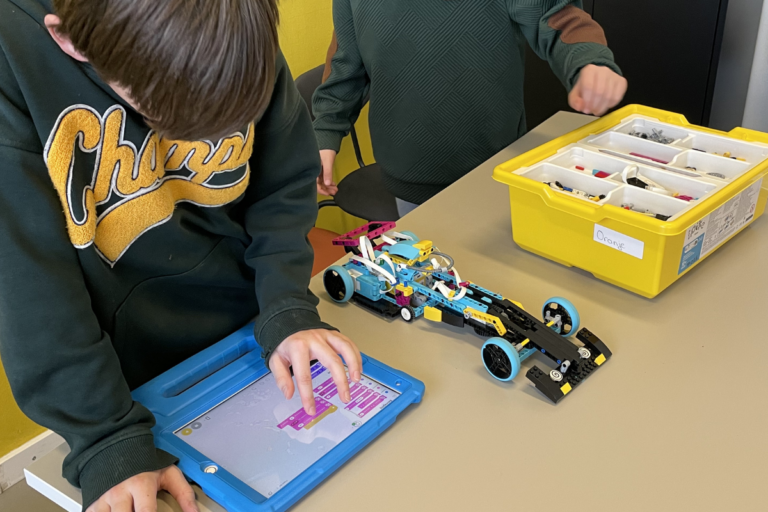
If plain building isn’t enough and your child wants their creation to actually do something, Bricks & Robots is worth a look. They run robotics studios in six cities, Amsterdam, Haarlem, The Hague, Rotterdam, Utrecht and Eindhoven, using LEGO SPIKE sets and tablets rather than instructions-only kits. The Amsterdam location is on Beethovenplein, and a birthday session there runs about two to two and a half hours with a maximum of twelve children. Kids build and programme a robot for one of three formats: a head-to-head Battle Bots Arena, a Robot Race against the clock, or a Mini Games Lab where they build tabletop games like a mini bowling alley or pinball machine. The Battle Bots and Robot Race formats suit ages six to twelve; Mini Games Lab works better from around eight, since there’s more programming involved.

This one is a step up from a standard LEGO engineering birthday party in terms of what the kids walk away having actually learned, since there’s real programming logic underneath the play. It’s not a bring-your-own-cake situation either, so check what food arrangements the venue allows before you turn up with a candle-topped cake and nowhere to cut it.
Real Engineering Workshops: TU Delft and De Bonte Bouwplaats
For the kid who’s genuinely into how things work rather than just LEGO for its own sake, two workshop-style venues stand out. TU Delft Science Centre runs birthday workshops led by TU Delft students, and the activity depends on age: six to eight-year-olds can build and programme a LEGO Spike amusement park, race marbles down a knikkerbaan, or make a drawing robot with multiple pens; seven and eight-year-olds solder together a wobbling SpiBot creature; eight and nine-year-olds wire up a trip-wire alarm; and ten and eleven-year-olds build a solar-powered mini race car modelled on the university’s own Nuna solar cars. Sessions run two hours for up to ten children, priced at €150 on Wednesday or Friday afternoons and €175 on Saturdays, and you’ll need to book at least two weeks ahead through the Science Centre’s own party page.

The other option, also in Delft, is De Bonte Bouwplaats, which runs three party themes around a construction playground setting: a general LEGO Master build, a Robotica session with programmable robots, and a Minecraft-themed LEGO build. The base package covers up to seven children for two hours, with extra kids added at a per-head rate up to a cap of twelve, and it includes a juice break, a demonstration, and party favours. Robotica is for seven and up; the LEGO Master and Minecraft themes take kids from five or six. Both Delft options mean a day trip if you’re coming from Amsterdam, but they’re worth it if your child wants hands-on soldering and real circuitry rather than click-together bricks.
Picking the Right Party for the Age Group
Under six, stick with plain LEGO building rather than robotics or soldering. Most providers won’t take younger kids into the programming-based parties anyway, and for good reason, sitting through a coding briefing isn’t realistic at that age. From six to eight, the LEGO Spike builds and Young Engineers’ at-home parties hit the sweet spot: enough structure to hold attention, simple enough that nobody gets frustrated. From eight upwards, robotics and soldering workshops genuinely land, and this is where Bricks & Robots and TU Delft’s SpiBot or alarm sessions come into their own.
A few practical things worth checking before you book any of these: ask exactly how many children the price covers before extra fees apply, confirm whether food and drink are allowed on-site (workshop venues are often strict about this near the electronics), and book earlier than you think you need to, since TU Delft in particular wants two weeks’ notice and Saturday slots fill first. If you’re travelling to Delft or a robotics studio outside your own neighbourhood, build in extra time for parking or public transport, since a two-hour party slot doesn’t leave much room for a late arrival. If none of the above quite fits your child’s age or your budget, our broader roundup of birthday party venues in Amsterdam and the best party providers around the city cover everything from trampoline parks to football-themed parties, including our guide to football birthday parties across the Netherlands if LEGO isn’t the theme that lands this year. You can also browse more family activity providers on our places directory.